Archive for Cave Diving

New Caves Discovered in Pangasinan

Posted in Cave, Penetration with tags on July 15, 2010 by Mark Caney

On July 3 PADI TecRec Cave Instructor Tom Morato & Cave Diver Karl Hurwood discovered 3 new dissolution caves in Pangasinan, approximately 4 hours north of Manila. The area of Pangasinan was the last place of occupation from the Japanese and it is believed that the Japanese hid gold and valuable artifacts inside the caves.  Based on this, it is very hard for the locals to comprehend that our purpose was simply to go explore the site for leads for future exploration.  

The first Cave

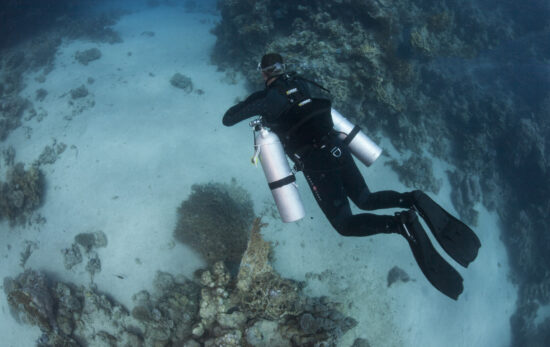
Once inside the cave we were both happy with the decision to use sidemount, especially within 4 meters inside the cave where there is a restriction that you really have to make great effort to fit in. After we both made it through, we were able to put 2 primary lines inside, roughly about 260M inside. Though crystal clear visibility, the stone is white & very soft creating a lot of percolation. Maximum depth 15M

The second Cave

This cave was bigger in length / width / height, lot’s of boulders on the ground and stone was not as soft and loose as the previous cave, this made deployment of guideline easier. The Stone is dark in color which absorbed our lights. After deploying two primary reels, we decided to turn around and take the reels with us in case we found another cave. We never reached the end of the cave Maximum depth  12m.

The third cave

No restriction for sidemount, but the ceiling is quite low.  Out of 4 leads, 3 were good.  Logistics in the area are easy, since all caves are accessible by car. Because of the proximity of the caves we believe that the caves are connected.  We will be back at the end of the month with more equipment, and put permanent lines in the caves as well as getting the GPS coordinates, so cave divers can enjoy the caves in Pangasinan and push them a little further in.

The Cave Environment and Conservation – part 2

Posted in Cave, Penetration with tags on February 12, 2010 by Mark Caney

By Vikki Batten – PADI International Ltd Technical Consultant

Following on from our overview of the cave environment and why it is so appealing to cave enthusiasts this instalment will look at threats to this environment, and how divers can help to protect it for the future.

Caves are made of rock so how much damage can a diver do? Sadly, we can do irreparable damage. We all know that damaging a coral reef can undo decades of growth but did you know that if you damage a cave it is unlikely to ever be replaced or repaired! Fragile rock, fossilised remains and soft sediments have formed over such long periods of time that any impact you make will be visible for thousands of years.

Each cave has it’s own unique beauty as well as scientific value and the potential to reveal further information in the future. Cavern and Cave divers, as lovers of this environment, should be ambassadors and ensure they do nothing to deface or damage it.

Cave Conservation – what can Cave Divers do? We start with the usual diving rule: take nothing but photos, leave nothing but bubbles, kill nothing but time. But we also have some specific guidelines to help minimise our impact:

  • A person selects and enters a cave by choice; the cave cannot discriminate between the trained or untrained, the careful or careless, and the respectful or reckless.*
  • Leave the cave as it was found; refrain from casual collecting of any kind.*
  • Make sure your skills are matched to the cave you are diving.*
  • Attempt to remove rubbish when possible and leave none of your own.*
  • Do not molest the cave; your impact will be visible for thousands of years to come.*
  • Develop an awareness of sensitive cave structures and features:

Goethite/ phreatite formations

Sediment formations

Delicate formations

Cave fauna and bacteria colonies

Speleothems; stalactites, stalagmites, etc*

  • Take Extra Care if you are using DPVs or staging cylinders or other equipment.
  • Don’t forget that all land is owned. Only dive in places where the land owner has given their permission. Diving without permission gives cave divers a bad name, jeopardises delicate negotiations for future access and, in some countries, can result in legal action, confiscation of equipment and/or vehicles.

Cave Conservation – a wider problem.

Sadly as with any environment the cave environment is under pressure from outside sources.

Different regions have different problems but a few examples are:

  • A growing population’s demand for water. If too much water is taken from cave systems the water pressure drops and cave collapses become more likely.
  • Caves suffer from water quality problems similar to that of lakes and rivers where agricultural and industrial processes and by products can cause contamination.
  • Waste and sewage management in highly populated or tourist areas can also cause contamination.
  • Building projects in areas where cave passages are only a short distance below the surface can cause damage, contamination and destabilisation.

Most of us don’t have any direct involvement with the organisations and companies that threaten the cave environment but developing an awareness of the issues is essential so that we can make educated choices on everything from where we stay on holiday to choosing our political representatives.

The final word comes from my cave instructor trainer who not only introduced me to caves and a lifelong love affair with cave diving but has also lived with me ever since (Coincidence?!) Whether diving in a cavern or cave or even visiting a dry cave he used one phrase to encompass both our attitude and actions; he taught me to Cave Softly.

References: * From the NSS (National Speleological Society) Cave Conservation guidelines. The NSS is an organisation dedicated to caves, the study, enjoyment, exploration and protection of them.

The Cave Environment and Conservation – part 1

Posted in Cave, Penetration with tags on February 11, 2010 by Mark Caney

By Vikki Batten – PADI International Ltd Technical Consultant and avid cave diver.

With the advent of the first PADI TecRec Distinctive Cave Diver Course there has never been a better time to start cave diving. It’s also a good time to take a look at the cave environment and why it is so appealing to cave enthusiasts.

There are several types of cave. Divers usually classify them according to rock type and how they are formed: Coral Caves, Sea Caves, Lava Tubes, Ice Caves and Solution Caves. Although all these types of cave are diveable most of them form only limited tunnels and offer only short penetrations. Solution caves are the most numerous and extensive and, therefore, most popular cave diving destinations. Some well known systems have miles of diveable tunnels with many entrances.

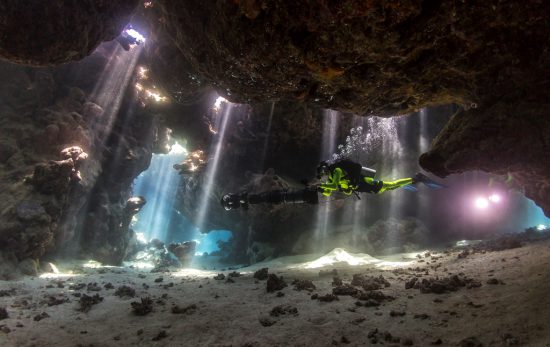
Diveable Solution Caves are formed in limestone and dolomite by dissolution of these rocks by weakly acidic flowing groundwater. The water dissolves the rock and carries it away over thousands and millions of years until caves form. Underwater caves and their beautiful surroundings are a window into the past and cave divers often become amateur scientists learning about the geological features and biological history of the areas they dive. The different conditions under which they form create extremely varied results from simple conduits to systems with extensive branching or maze like passages. Some caves are highly decorated whilst others contain fossils of pre-historic creatures or give us a glimpse of a former coral reef sea bed.

What about critters? The entrances to caves often have plenty of life in them and form shelter for anything living in the surrounding environment, whether it is marine or fresh water. However, the further you go back in most caves the less obvious the life becomes and unless you are a complete creepy crawly nut the critters are unlikely to be your motivation to cave dive.

So, why cave dive? Well, let me tell you a story….. my Dad’s first cavern dive was in a well known cave in France called the Ressel. The entrance is 9 metres deep and the cavern zone (where light enters the cave) is not very long. To start with we went in just a few metres, swam around, had a good look and came back out. He had enjoyed it, so on the second dive we went in just a little further. When we were talking afterwards he said “ I’d definitely like to come back – I want to know what is beyond the area we dived!” Ha Ha – got you! THAT is the reason I cave dive. I fell in love with the geological features, the puzzle of how caves are formed and what the different formations tell us about their history but I will never have enough of cave diving because I am insatiably curious and no matter how far I dive in a cave I always wonder what is around the next corner!

In the next instalment we will look at threats to this environment, and how divers can help to protect it for the future.

Follow

Get every new post delivered to your Inbox.

Join 1,392 other followers

%d bloggers like this: