Bikini Expedition

Posted in News on March 20, 2013 by kattek

By Rosemary E Lunn,

If you think that prepping tech equipment for a local dive is a big deal, just imagine running a technical diving expedition to Bikini Atoll. It is no mean feat ensuring that visiting divers have all the sorb, oxygen, dil, stages, oxygen clean cylinders, twinsets and other consumables they require. Then add in the extra complication of diving a far-flung land – it is not the time to discover you have left a crucial piece of kit at home after 30 hours steaming. However this is all in a day’s work for PADI Course Director Pete Mesley of Lust4Rust Diving Excursions. Pete has quickly earned the reputation of being ‘that good’ that leading tech experts actively seek to dive with him when they explore remote locations.

Nagato 02 (3)

Nagato 02

As I write this Pete is organizing the logistics for an expedition to Bikini, and if you want to join this exped, then jump onto www.lust4rust.co pronto. For once he has got a couple of rare spaces free on the June 2013 trip. (Normally his holidays are booked solid months in advance). Unfortunately no matter how much my heart wants to say ‘yes do it’, my diary will not allow me to go and play on this particular exped. It is a shame because I will have to delay my in-water gratification with the expedition’s hyperbaric physician until another time. For the diving doc Pete is taking to Bikini is none other than Associate Professor Simon J Mitchell.

Professor Simon Michell

Professor Simon Michell

One of the unique benefits of diving with Lust4Rust is that Pete Mesley always has an experienced diving doctor on staff. “It makes sense to take the best of the best along to support advanced and technical divers”, Pete says. This year Dr Mitchell is the Bikini medic. ”Who?” I hear some of you cry. For the uninitiated who have never attended EUROTEK, OzTek or Rebreather Forum 3, Simon is a renowned hyperbaric physician and anesthesiologist. He is in much demand and regularly talks at many medical and diving conferences and courses all over the World. If you ever get the chance to listen to him, grab it with both hands. Speaking from first hand experience Simon is a joy to listen to, because he is one of those rare talented speakers that can explain complicated issues such as CO2 retention (to a three year old), without patronising. You walk away from one of his talks thinking “that was so obvious, why on earth did I not see it before?”

I ask Pete what is so special about diving Bikini. “The Marshall Islands are no longer served by an airline, so the only way to dive this wreck mecca is from a liveaboard. Plus trips to this isolated destination are run at certain times of the year, so it means that this destination is rarely visited or dived. Little wonder it is on the top of most wreck divers bucket list!

Pete mesley 2

Pete Mesley

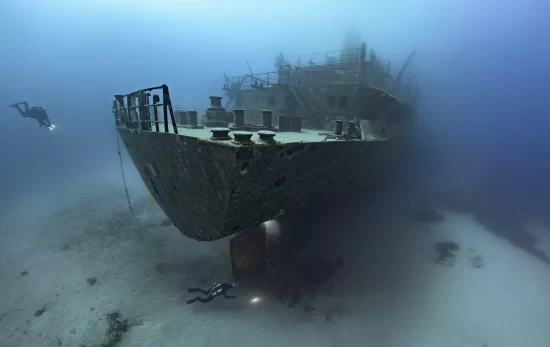
The wreck diving is phenomenal and you have such a wide choice of ships to dive on. From heavy cruisers, to submarines. Then of course there is Bismarck’s escort, Prinz Eugen, and the aircraft carrier, USS Saratoga. You can get on her at 27 metres, which makes for some quite decent times without incurring punitive decompression stops. And because there is such a small amount of diving done here, less than 5% of the Saratoga has been penetrated. It’s like an 18 course banquet laid out in front of you. So much visual rust, you don’t know where to start first!

Bikini is 30 / 30 diving – 30 degrees centigrade water, combined with 30 metres plus visibility. Wreck diving heaven. Plus I love the relationship that we able to build with the wrecks on these trips. It is quite intimate because we dive each ship at least twice. For me this is last frontier diving at its very best.”

The First Ever Tec Sidemount Course in Utah, USA

Posted in News, Tec Rec on March 18, 2013 by kattek

 The first ever Tec Sidemount Course in Utah, USA was wrapped up this past weekend by Tec Sidemount and Trimix Instructor, Chris Langehaug, MI #271122.  Chris offers all levels of Open Circuit Technical Diving, Sidemount, and Rebreather Training.  Chris is the Director of Technical Dive Training for Dive Utah-Holladay, S-875, the only PADI TecRec Center in the region. 

Chris Langehaug - TecRec Instructor

Chris Langehaug – TecRec Instructor


The program was conducted using The Crater, a unique geothermic facility that allows year round diving for all types of dive training.  The staff of “The Crater” in Midway, Utah (USA) are happy to work with instructors conducting these advanced courses.  More information about this remarkable dive site can be found at www.homesteadresort.com/Crater.  

This slideshow requires JavaScript.

The Tec Sidemount course was challenging but a lot of fun.  The students had a great time and are looking forward to continuing their technical dive training in sidemount with Chris over the next few months.

Tec Dossier – Andy Phillips

Posted in News, Tec Dossier on March 14, 2013 by kattek

Any PADI/TecRec certification: PADI Trimix Instructor Trainer and Poseidon MKVI Rebreather Instructor Trainer

Usual Country of residence: Utila, Bay Islands, Honduras

Andy-Phillips-Meg-shot

What is your background and current involvement in diving?

I took some time out from an office job in 1997 and trained to become a Divemaster and fell in love with the pro lifestyle.  I was working in Thailand filling tanks, driving boats and guiding divers, even if just for a few $ a day it was enough to convince me to quit the corporate world and go on and become a PADI Instructor.  I travelled to Honduras for my Instructor course and the start of a 2 year gap-year with the plan to travel the world and work as an Instructor, that is now a ‘15 year gap-year’ and I’m hoping for another 15 years at least!  I’ve been conducting professional and technical level training and am the Director of Training for the Utila Dive Centre, a PADI CDC in Honduras.

How did you get into tec diving?

I was working as a PADI Instructor in Dahab in 1999 as tec diving was emerging in the area, and my interest in exploration was awakened, and to dive deeper sites like the ‘Arch’ at the Blue Hole safely.  There’s nothing like memorials at a dive site to reinforce the limits of recreational diving and to seek out proper training and equipment for deeper technical diving.

Do have any specialised areas of interest?

I’ve been cave qualified since 2003, and in the last 3 years have moved into sidemount configuration, and living so close to the Yucatan of Mexico, I make at least 1 cave trip a year to explore off the beaten path.  I’m also still exploring deeper sites around the island of Utila using trimix in my rebreather, and have been running rebreather trips to the Galapagos Archipelago in the last few years for the Hammerhead shark encounters.

Photo taken from inside Yellow Sub on 80mt_270ft Roatan dive

What do think the greatest challenges are in this kind of diving?

Recognising your current limits as a technical diver, and developing your own attitude, discipline and finesse before advancing to the next level, or out of your comfort zone.

What are the most important attributes of a tec diver for the type of diving you do?

Preparation, patience, open-minded and a healthy dose of paranoia!

What are the most likely mistakes a tec diver can make in your kind of diving?

Not accruing experience as a diver between levels of training, particularly in the field of rebreathers.

How do you prepare for a demanding technical dive?

Aside from team briefings and planning, I like working out and running to get both physically and mentally prepared, and spend time mentally visualising the profile and plan.

What were your best or worst tec diving experiences?

I’ve been fortunate not to have any ‘worst’ experiences as far as executing dive profiles or in teaching.  I have been involved in a recovery project on a ‘ghost fishing net’ off our reefs several years ago, and whilst I was happy to have been part of a technical team that helped lift a damaging and destructive fishing net from the reef, it was saddening to see first-hand the destructiveness of such a large net and the aquatic life lost through entanglement.  I was also involved in the recovery of a $2 million dollar helicopter that went down in Lake Atitlan in Guatemala, an inactive volcanic lake at 1700 meters/5500 feet altitude, conducting searches in the 60-90 meter/200-300 foot range, and it was great to have been part of a team that located and removed the helicopter before the aquatic environment was damaged.

Hanging on deco in Utila at end of Trimix Instructor course

What influences your selection of dive gear?

I’m a big believer in practising what you preach, getting out in the field and not just spending time in the classroom, and I favour the manufacturers who also spend time in the field and who develop their products not just on customer feedback or marketability, but through their own diving and exploration.

What kind of person do you want diving in the same team as you?

Someone who really understands the mechanics of a profile/plan and knows their equipment or rebreather inside out, has forethought and vision, and is a team-player.

What advice would you give to someone thinking of getting into tec diving?

Find an Instructor, with well-rounded technical dive experience, who is willing to mentor not just teach, and is also actively educating themselves as well. 


First Certifications Issued on Hollis Explorer Sport Rebreather

Posted in News, Rebreathers, Training on March 12, 2013 by kattek

 The first PADI course on the Hollis Explorer Sport Rebreather was recently held in northern Florida. In attendance was John Conway, Rebreather Training Director for Hollis, Georgia Hausserman, PADI Technical Diving Division and Rebreather Advisory Team member, Kelly Rockwood, PADI Technical Diving Division member and Training Consultant, Steve Olfe, PADI Course Director and Dive Center owner and Mischa Hausserman, PADI IDC Staff Instructor.  

The first day of the course was spent learning the technology behind the electronic control of the semi-closed rebreather, assembly and predive procedures as well as maintenance of the components. The next two days were spent in the water, where the units performed flawlessly while they and the divers were put through their paces.  

The design of the Explorer appeals to the recreational diver because of its ease of use, integrated jacket-style BCD, back mounted counterlungs and use of EANx. The electronics guide the diver through the startup procedure with prompts to evacuate the loop, turn on the supply gas and prebreathe.  The Explorer senses the negative loop test, analyzes the gas and performs a positive loop test.  Setting up the rebreather and getting it ready to dive takes no more than about 10 – 15 minutes.

  Diving the Explorer has the ease of diving an open circuit nitrox system with all the benefits and the feel of diving a closed circuit rebreather. The wrist-mounted computer displays current depth, elapsed dive time and remaining dive time based on the controlling resource (NDL, gas supply, filter time). For the more advanced rebreather diver, additional dive information including PO2 may be displayed with the push of a button.  

Based on the planned dive the diver can select before or during the dive, whether they prefer a longer NDL but higher gas use or shorter NDL and less gas usage by adjusting the Dive Control Parameter (DCP). The electronics maintain a computer selected PO2 based on the depth, the percentage of oxygen  in the supply gas(O2 must be between 32% and 40%) and the DCP setting selected by the user. Its as simple as using a single gas nitrox computer.

  The Hollis Explorer is a Type R Rebreather and is on PADI’s Register of Rebreather Units.  PADI Americas has Explorer Diver Courses scheduled in several US locations beginning in April. Times and locations are listed on the PADI Pros’ Site.  PADI EMEA and Asia Pacific regions will announce course dates and locations soon.

PADI_Hollis Explorer Training Programs_2013

2013 PADI_Hollis Explorer Registration Form


ملف الغوص التقني الشخصي

Posted in News, Tec Dossier on March 11, 2013 by kattek

الاسم: فراس جندي

مؤهل PADI/TecRec: مدير دورات PADI ، مدرب مدربين غوص تقني ثلاثي الغازات ومدرب مدربين غوص تقني بالتثبت الجالنبي.

مكان الاقامة : أيرلندا / مصر

Tec Dossier 1ماهي خلفيتك عن الغوص و مشاركتك الحالية فيه؟

عملت كمدرب غوص متفرغ منذ عام 1991 في المملكة العربية السعودية. في عام 1997 حصلت على مؤهل مدير دورات PADI. أعمل حاليا في PADI أوروبا و الشرق الأوسط و أفريقيا كمستشار تدريب و ممتحن مدربين.

كيف دخلت في مجال الغوص التقني؟

في عام 2005 انتقلت للعيش في جنوب سيناء، يوفر هذا الجزىء من البحر الأحمر مواقع غوص رائعة ولكن قد تكون أبعد من حدود الغوص الترفيهي . في ذاك الآن أكملت الخطوة الأولى و هي تدريبات Tec Deep Divers.

Tec Dossier 2

هل لديك أي نواحي تخصصية أو رغبات؟

حيث ان مقر معيشتي الرئيسي هو أيرلندا ، نمت عندي الرغبة في اكتشاف حطام السفن العميقة و التي يوفر المحيط الأطلسي العديد منها.

في اعتقادك ما هي أعظم التحديات في هذا النوع من الغوص؟

تضع المياه الباردة الغواص في العديد من التحديات. خلافا عن البحر الأحمر، فان بدرلات الوقاية، الرؤبة الضعيفة و التيارات تتطلب طرق غوص / تخفيف الضغط مختلفة لكي  تاكافأ بزيارة حطام سفينة لم يزورها الكثير من الغواصين.

ما هي أهم صفات الغواص التقني  للقيام في هذا النوع من  الغوص.؟

الصبر ، لاعب في الرفيق ، الحذر و الانضباط.

ما هي أعظم الأخطاء التي يمكن للغواص التقني القيام بها في هذا النوع من الغوص التقني؟

عدم معرفة او الالتزام بالحدود الشخصية و مستوى الراحة الشخصي.

كيف تستعد لغوصة تقنية ذات تحديات؟

التخطيط  و التدرب على الغوصة من خلال غوصات تشبيهية

ما هي أحسن أو أسوأ غوصة تقنية قمت بها؟

أحسن غوصة كانت لعمق يتجاوز 100 متر في دهب – البلو هول

أسوأ غوصة! لدي مبدأ شخصي بالنسبة للتجارب السيئة في الغوص التقني – الذي تتعلمه منها يمكن أن ينقذ حياتك يوما من الأيام.

Tec Dossier 3

ما هي المؤثرات على اختيارك لمعدات الغوص؟

يجب للمعدات أن تكون مناسبة لنوع و بيئة الغوص بالاضافة أن توفر الراحة الشخصية.

ما هي نوعية الشخص الذي ترغبه ان يكون في نفس فريق الغوص الذي تنتمي له؟

لاعب في الفريق – لايبذل الضغط الشخصي على الآخرين و لا يخضع له.

ما هي النصيحة التي يمكن اعطائها للشخص الذي يرغب في المشاركة في الغوص التقني؟

توجد عناصر ثلاث لتشكيل غواص تقني جيد / آمن: أفضل انظمة التدريب / المواد التعليمة – مدرب جيد – غواص يتمتع بصفات الغوص التقني الحميدة. لذا اختر الاثنين الأولى بحذر و لا تتجاهل المسؤولية التي تقع على عاتقك للمحافظة على الصفات التي تتعلمها أثناء الدورة بعد التدريب.

Tec Dossier – Firas Jundi

Posted in News, Tec Dossier on March 11, 2013 by kattek

PADI/TecRec certification: PADI Course Director, TecRec Trimix & Tec Sidemount Instructor trainer

Usual Country of residence:

Ireland & Egypt  Tec Dossier 1              

What is your background and current involvement in diving?

I began working full time as a diving instructor since 1991 in Saudi Arabia. In 1997 I became a PADI Course Director. Currently I work for PADI EMEA as aTraining Consultant and Instructor Examiner. 

How did you get into tec diving?

In 2005 I moved to South Sinai, this part of the Red Sea offers magnificent sites but they can be beyond the limits of recreational diving. This is when I took the first step and completed the Tec Deep Diver training.

Tec Dossier 2

 Do have any specialised areas of interest?

Being based in Ireland has developed an interest in the Deep Wrecks which the Atlantic Ocean has many of to offer.

What do think the greatest challenges are in this kind of diving?

Cold water diving is very demanding. As opposed to Red Sea diving exposure protection, lower visibility and currents require different diving/decompression diving techniques to be rewarded with visiting a wreck which is hardly dived.

What are the most important attributes of a tec diver for the type of diving you do?

Patience, Team Ylayer, Wary & Discipline 

What are the most likely mistakes a tec diver can make in your kind of diving?

Not knowing/sticking to personal limits and comfort zone.

How do you prepare for a demanding technical dive?

Planning, rehearsal & practicing through a simulation dive.

Tec Dossier 3

What were your best or worst tec diving experiences?

Best was 100 +M in the Blue Hole – Dahab

Worst dive! I have a personal approach to bad tec diving experience – What you learn from it, one day can save your life. 

What influences your selection of dive gear?

Dive gear should be suitable for the type of diving environment/conditions as well as providing personal comfort 

What kind of person do you want diving in the same team as you?

Team player – does not exert/succumb to peer pressure

What advice would you give to someone thinking of getting into tec diving?

It takes three elements to make a good/safe tec diver: Top training system/materials – Good instructor – Diver with good technical diving attributes. So, choose the first two carefully & do not ignore the responsibility that lies on you to have the attributes you learn during the training.

When one tank is not enough?

Posted in News on March 5, 2013 by Mark Caney

TankOverboardOfficials dump a Chinese-made T-69 armoured tank into the Gulf of Thailand, near the southern Narathiwat province on August 9, 2010. More than 25 decommissioned Thai-army tanks were dumped and now form artificial corals that are supposed to improve the marine ecosystems and increase fish stock in the area.

Follow

Get every new post delivered to your Inbox.

Join 1,392 other followers

%d bloggers like this: